20+ years of experienceOrganization, proper crew and safe handling of the building.




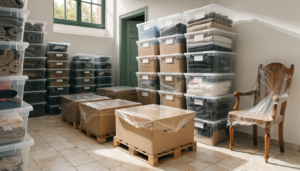




Moving an Elderly Parent Moving into a smaller home goes more smoothly when you start by assessing the new space (measurements/access), set a realistic timeline, sort through your belongings using clear guidelines, and organize packing and transportation safely. The goal isn’t simply to «empty out» the old house, but to establish a functional, safe, and comfortable new living environment.
1) Start with your new home (not your closets)
Before you open up your attics and storage areas, «map out» the destination space. This reduces second-guessing and prevents you from moving furniture that ultimately won’t fit or gets in the way.
- Measurements: rooms, doors, hallways, elevators, stairwell.
- Access/Parking: where the vehicle can stop, and whether a permit or coordination with management is required.
- Floor plan showing layout: Mark where the main pieces of furniture (bed, sofa, table) will go and leave clear pathways.
If access is difficult or the floors are high, the solution is often lifting equipment, in order to reduce the need to carry patients up narrow staircases and make the process safer.
2) A realistic timeline with small steps
When helping an elderly parent move, rushing increases stress and leads to mistakes (forgotten documents, poor packing, family conflicts). Break the task down into small, short sessions with one goal at a time.
- Week 1: Measurements/floor plan, role assignment, «must-haves» list.
- Week 2: sorting into «easy» zones (storage, utility, cleaning supplies).
- Week 3: kitchen/bathroom, clothing, basic furniture.
- Recent days: documents, photographs, personal belongings, final packing.
Practical principle: Whatever is decided is recorded (in a shared notebook or file) so that the same discussion does not come up again.
3) A 4-category sorting system
The most practical approach is for each item to have a clear destination. This helps reduce the «gray areas» that slow down the move.
- We're keeping: fits, is used, or has real sentimental value.
- He's going to visit a relative: Write your name and the date of receipt.
- For donation or sale: only through a realistic assessment of the situation and demand.
- Removed: for recycling/disposal or special handling (e.g., bulky items, electrical appliances).
Use labels or colored tape. Important: Avoid the «maybe» category, because it leads to a permanent delay.
4) Keep the parent at the center of decision-making
Moving can feel like a loss of control. As much as possible, parents need to make decisions about their personal belongings, the layout of the new home, and family heirlooms.
- Here are the «selection zones» where the decision rests solely with the parent (e.g., photographs, mementos, favorite pieces of furniture).
- Set aside «purely practical» decisions in the household (expired, worn-out, duplicate items).
- For items with a history: Take pictures of them and write 2–3 sentences about their origin. The memory is preserved without taking up any space.
If there are disagreements among siblings, it helps to set deadlines and document options, prioritizing the parent’s comfort and safety.
5) Packaging designed with an emphasis on safety and easy access
Proper labeling and logical packing reduce stress and accidents. For an elderly person, the priority is to quickly find essential items during the first few days.
«First 48 Hours» Checklist»
- Medications, prescriptions, health insurance cards/medical documents
- Clothes for 2–3 days, pajamas, slippers
- Toiletries, towels, paper products
- Chargers, phone, flashlight, or night light
- Water, light meal
- Keys (for the old/new house), basic tools
Box labeling: room + contents + «fragile» labels where necessary. For boxes containing documents or valuables, it is best to have them transported personally by a trusted family member.
If you need to disassemble or reassemble furniture so it can fit through doors or be properly placed in the new space, it helps to furniture assembly as a structured part of the plan (and not as a «last-minute» addition).
6) Moving Day: Access, Flow, No Overloading
On moving day, a smooth workflow is more important than speed. Double-check access, elevators, quiet hours, and parking at both locations.
- Set up first a bed, basic lighting, and a safe route to the bathroom and kitchen.
- Avoid stacking in hallways and near stairways/exits.
- Appoint a coordinator (one person) to answer questions and confirm «what goes where.».
For comprehensive logistics management, Prime Transport can handle the shipment, ensuring the correct loading/unloading sequence and coordinating access, through its service removals.
7) Cost: What Factors Affect It When an Elderly Parent Moves
There is no «one-size-fits-all» price. The cost is usually influenced by practical factors that you can control by being prepared:
- Volume/type of items (fragile, bulky, many small items)
- Floor, presence and dimensions of elevators, difficulty of stairwell
- Access/parking near the entrance
- Disassembly/Assembly and Special Handling
- Need for a forklift or additional staff to ensure safe transport
Tip: The more clearly you describe the location and access, and exactly what the job entails, the better the appointment can be organized and the fewer surprises there will be.
8) After the move: adjustment period and minor adjustments
Just because the move is complete doesn’t mean the transition is over. Stick to familiar routines, place favorite items in plain sight, and let the space «settle in» for a few days before filling every corner.
- Check to make sure the routes are safe (bathroom, bedroom, kitchen).
- Only make minor adjustments to the furniture layout after observing how it is used on a daily basis.
- Keep a list of pending items and set a date for review.
Frequently asked questions
When should you start preparing to help an elderly parent move?
As early as possible, taking small steps. Gradually sorting items by room reduces stress, prevents mistakes (regarding documents or medications), and gives parents time to be involved in decision-making.
How do we decide which pieces of furniture to move to a smaller home?
Based on precise measurements of the new space, safe traffic flow patterns, and actual daily use. A simple floor plan helps you see if it «fits» functionally, not just geometrically.
What items should be carried personally rather than packed in general boxes?
ID cards/documents, medications, keys, money/jewelry, and anything else you’ll need right away during the first few days. Ideally, a trusted family member should keep these in a separate bag.
When do you need a forklift for a move?
When there are high floors, narrow stairwells, a small elevator, or bulky/fragile items that cannot be safely moved through common areas inside the building. This often reduces risks and delays.
How can we reduce stress on moving day?
With a clear plan, a coordinator, properly labeled boxes, and a priority on setting up the bed, lighting, and safe pathways first. It also helps to have a calm person next to the parent who isn’t «rushing» the unloading process.
Sources
- European Commission – GDPR (General Data Protection Regulation): https://commission.europa.eu/law/law-topic/data-protection/eu-data-protection-rules_el
- EOF – Information on the Proper Use and Safety of Medicines (General Information): https://www.eof.gr
- EKAV – General Guidelines/Information on Emergency Assistance (Information): https://www.ekab.gr