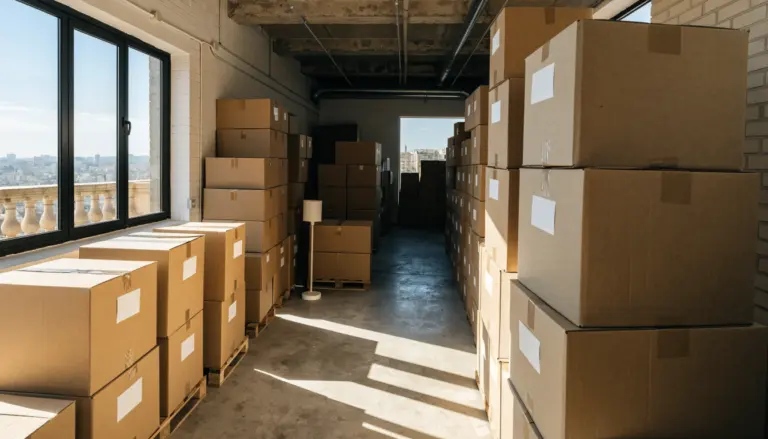
20+ years of experienceOrganization, proper crew and safe handling of the building.







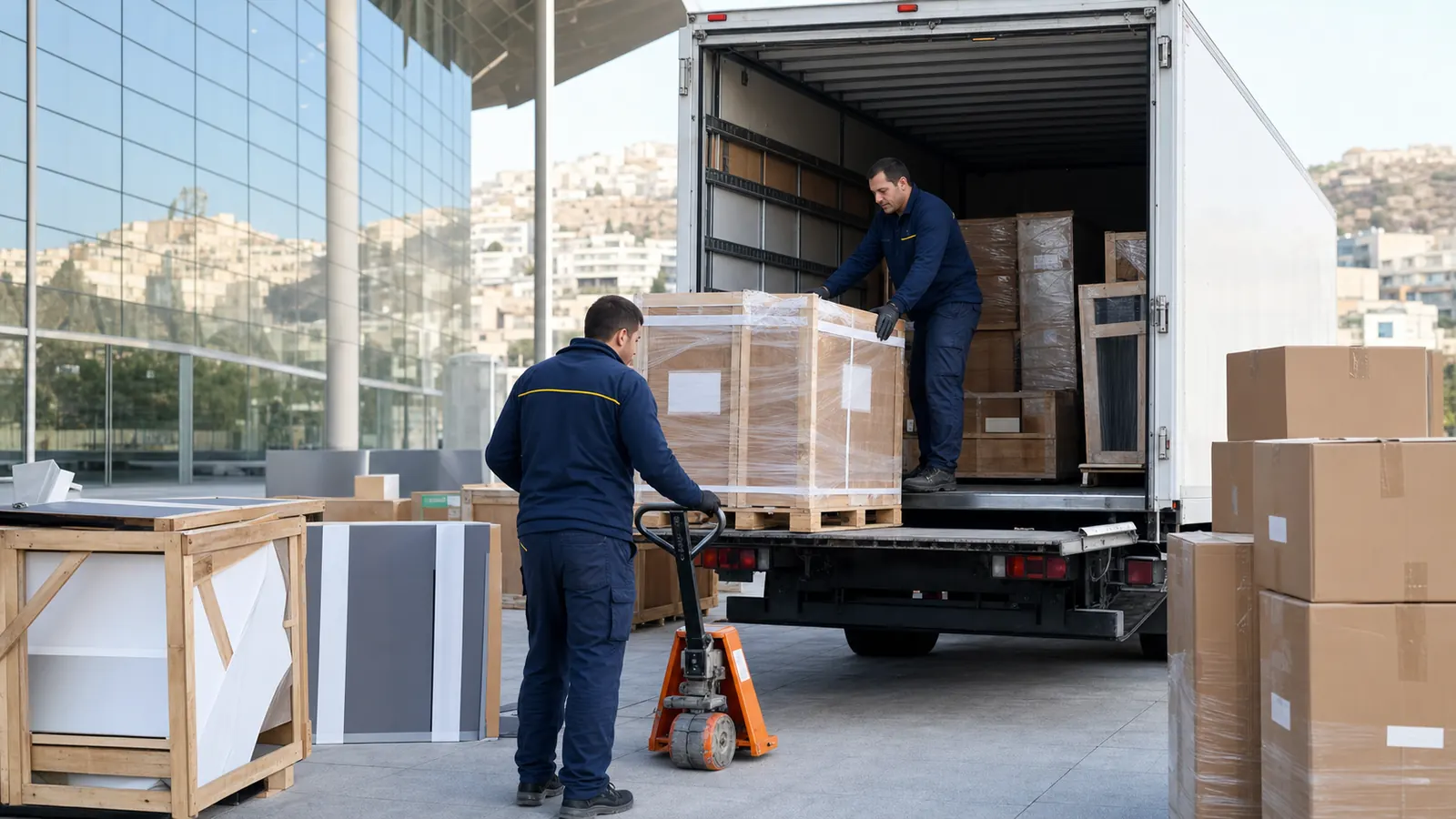
The transfers to exhibitions are not like a typical transport: there are strict time windows (move-in/move-out), access restrictions, the need for impeccable packaging and coordination with organisers, stand builders and venues such as the TIF-HELEXPO (Thessaloniki) and the Metropolitan Expo (Spata).
In the guide you will find practical steps to organise the transport of exhibition equipment safely, consistently and without surprises.
What is included in an exhibition equipment transfer
- Receiving from warehouse/headquarters, recording and photographing materials.
- Packaging and protection (coving, foam, corners, stretch film).
- Marking & labelling per booth zone (e.g. «Floor», «Lighting», «Products»).
- Loading/binding, secure transport and delivery appointment at the dock.
- Unloading, transport to the stand and, where required, support with lifting equipment.
- Return, storage between trade shows and next shipment (trade show to trade show).
Tip: If you have a small volume (boxes/roll-up/stand), consider solutions such as cargo taxi ή microtransports. For large constructions, full coordination and specialised handling is required.
Timeline: when to start
To achieve timely delivery and smooth installation, work to a simple schedule:
- 4-6 weeks before: book transport, ask for access instructions from the organiser and finalise dimensions/weight.
- 2-3 weeks ago: prepare an inventory list and decide what goes in crates and what goes on pallets.
- 3-5 days before: complete packing, check labels and make a delivery/unloading appointment.
- Delivery Day: an on-site manager receives, checks and directs the correct placement.
Packaging that withstands «exhibition rhythms»
The packaging is the point that judges the damage and delays. For exhibition material prefer:
- Wooden crates (crates) for perishable/expensive items and kiosk parts.
- Foams/corners/blankets for vibration protection.
- Durable boxes and internal separators for products/samples.
- Clear marking (fragile, up/down, priority, «opens last»).
Access to showrooms: what to check
Each venue and event has rules for vehicles, loading and schedules. By way of example, TIF-HELEXPO provides for the use of loading areas and procedures set out in its operating regulations. Before starting the transport, always ask for official instructions (move-in/move-out, ramps, entry points, permits).
Insurance and carrier liability (what it means in practice)
So that you are covered:
- Ask for clarification what is transferred (list/values), how it is packed and who loads/unloads.
- Check if additional is required cargo insurance cover for high-value exhibits or equipment.
- In international road transport the CMR framework applies, while in national transport the relevant provisions of the Commercial Law and carrier liability insurance obligations apply.
Checklist for the day of the transfer
- You have final inventory and photos before loading.
- All boxes have belt label (e.g. A1, A2) and opening priority.
- There is point of contact on site (phone, gate, dock, appointment time).
- Bring basic tools/consumables (tape, binders, cutters, gloves).
- Plan time for queues/entry control (especially in large venues).
How to choose a transport company for transport to exhibitions
- Experience in exhibition transport (move-in/move-out, strict deadlines).
- Availability of equipment (tie-downs, pallet trucks, ramps, hoist when needed).
- Clear packaging/labelling procedure and responsible coordinator.
- Transparent terms for insurance, liability and any additional services.
Η Prime Conveyance supports organised transport at exhibitions with an emphasis on the safety of exhibition equipment, timely delivery and proper coordination. If you need additional tasks (e.g. assembly or lifter), we can include them in the plan.
Frequently asked questions
When should I book a courier for transport to exhibitions?;
Ideally 4-6 weeks in advance to ensure availability, get access instructions from the organiser and arrange packing/delivery appointments.
What is the difference between transfers to exhibitions and a simple transfer?;
There are strict time windows, entry/loading restrictions and the need for accurate signage so that the exhibition equipment arrives ready for immediate installation.
Can you undertake lifting or setup support?;
Yes, when required we can integrate support with lifting equipment and crew, depending on the weight/volume and the rules of the exhibition space.
What is needed to access places like TIF-HELEXPO or Metropolitan Expo?;
Usually move-in/move-out instructions, specific appointment times, entry/docking points and possibly permits or vehicle details are required. We always ask for the organization's official instructions prior to departure.
How do I reduce the risk of damage in the transport of exhibition equipment?;
With crates for perishable parts, correct labelling per zone, firm tying on loading, and clean inventory for control during delivery and return.
Sources
- TIF-HELEXPO: Regulations for the International Exhibition & Conference Centre (Thessaloniki)
- Athens International Airport (AIA): information about the Metropolitan Expo
- FOODTECH: access to the exhibition centre (Metropolitan Expo)
- Hellenic Association of Insurance Companies (UAEE): carrier liability & insurance obligation
- OFAE: Law 3887/2010 on road freight transport