20+ years of experienceOrganization, proper crew and safe handling of the building.






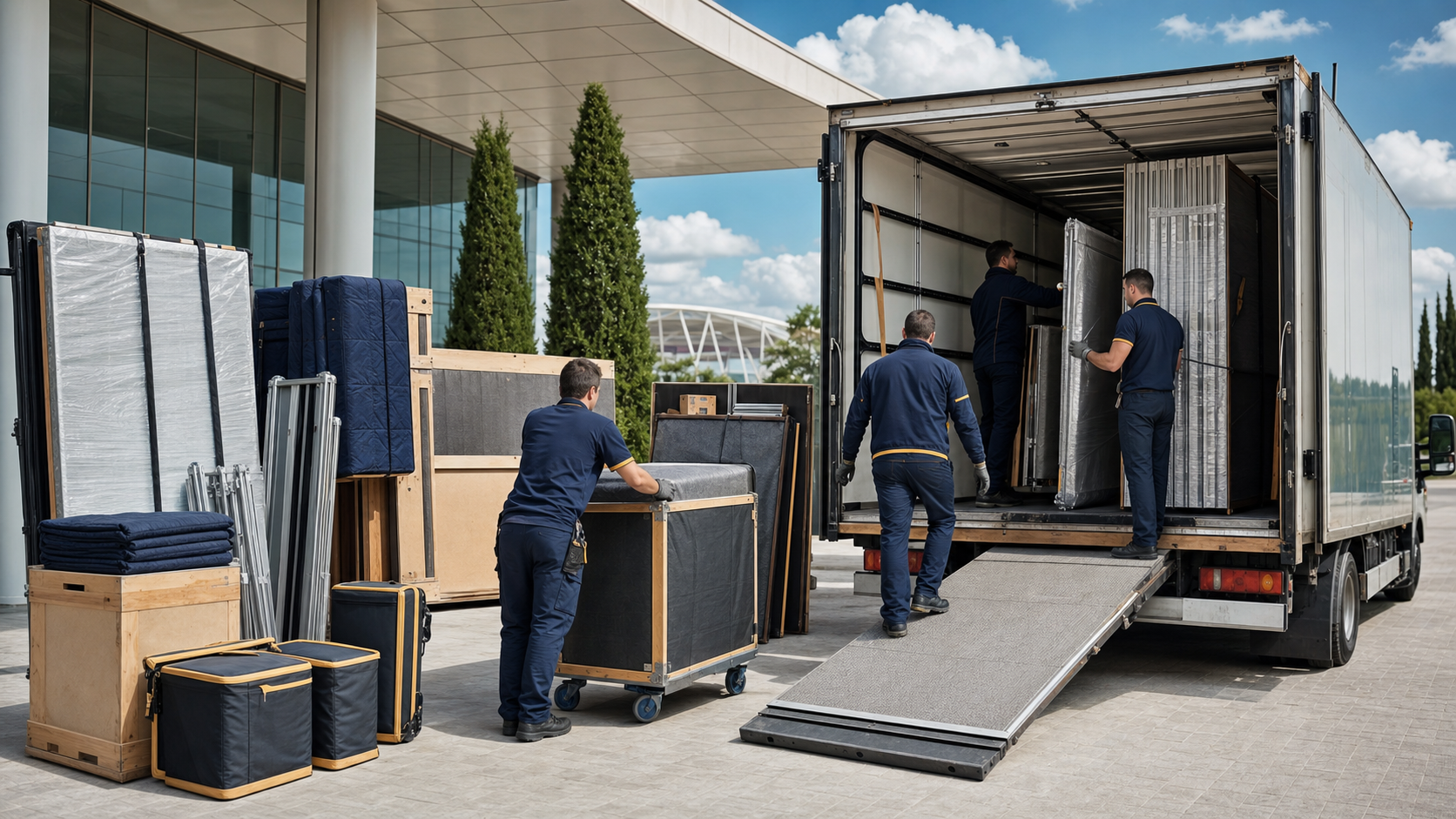
Η transport of exhibition equipment is not a «simple metaphor». It usually has strict timetables (move-in/move-out), access restrictions, fragile or expensive objects (structures, fixtures, screens, samples) and the pressure that «must be set up on time».
Below you will see practically what changes in the metaphor when we talk about large ή small exhibition stand, what to check before you start and how to reduce delays and damage.
Quick Prime tip: Ask the organiser/technical company of the exhibition for access instructions and working hours before you «book» the vehicle and workshop. A correct schedule costs less than a delay.
Request an offer based on volume, access and hours of exposure.
Large vs small stand: the main differences
1) Volume, weight and loading method
In large pavilions, the equipment is usually more and more complex (wooden/metal structures, boxes, floors, multiple «pieces»). This means more time in loading/unloading, more places where mistakes can be made and often a need for a forklift or assistance within the exhibition space.
In small stands (e.g. roll-up, modular stand, few boxes), the transport can be done more flexibly and quickly, even as micromanagement - as long as it has been properly packaged and there are clear delivery instructions.
2) Site access and space restrictions
The exhibition space may have specific entrances, ramps, vehicle entry hours, traffic and speed rules, or restrictions on opening days. This is why «last minute» is a risk: time may be lost at the gate or additional documentation may be required.
3) Setting up/disassembly
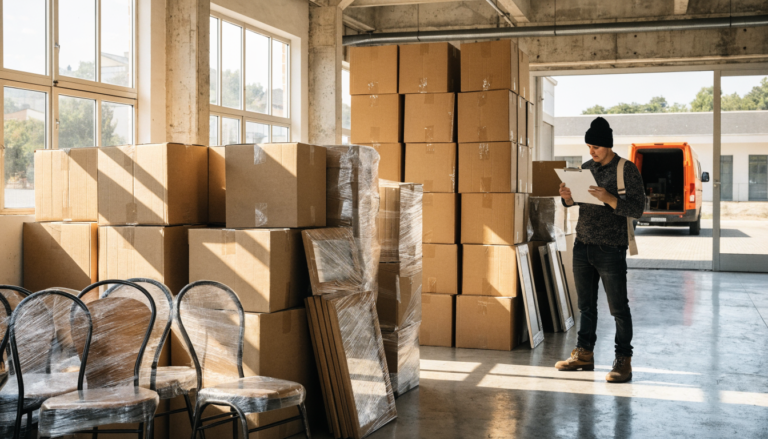
The transport of exhibition equipment almost always «couples» with set-up and dismantling operations. In large stands, dismantling and repacking is a critical stage. When furniture/structures are present, it helps to provide for assembly/disassembly and put the ingredients in order for a quick reset.
Preparation checklist (before the day of the exhibition)
- Load recording: list of boxes/parts, dimensions and notes «fragile»/«up and down».
- Photos before loading: help in control and in any insurance procedure.
- Contact with organiser: arrival times, entrances, delivery point, unloading rules, truck parking.
- Time buffer: especially in Athens/Thessaloniki, expect traffic/access delays.
- Lifting/difficult access: if there are heavy elements or floor, consider solution with lifting machine or appropriate equipment.
- Contacts of the day: phone number of the booth manager + logistics/transportation manager, so as not to waste time at the gate.
Packaging and protection: what makes the difference
- Hard cases/boxes for sensitive equipment (monitors, lighting, samples).
- Marking by zone (e.g. «bench», «panels», «electrical») to set up quickly.
- Separate “first open” box” with tools, tapes, bindings, polybrides, spare parts.
- Surface protection (corners, membrane, foam) to avoid scratches on panels/furniture.
Costs and insurance for the transport of exhibition equipment
Costs are mainly influenced by the volume, the Accessed at, the required working time, the timetables of the exhibition and whether it needs workshop for set-up/break-down. In business missions, it is worth discussing in advance and for the insurance coverage - especially when there are expensive or critical items for your presence at the exhibition.
Want a cleaner shot?; Send us a list/photos of equipment and showroom attendance times.
Frequently asked questions
How early do I need to organise the transport of exhibition equipment?;
Ideally, as soon as you have locked in your entry and received the exhibitor's instructions. This gives you time to schedule a vehicle/equipment within the preparation times and avoid spikes.
What changes when the stand is small?;
It usually requires less loading/unloading time and can be handled more flexibly (e.g. as a micro-transport). However, proper packaging and clear labelling remain critical.
Do you need a hoist or special equipment?;
Where there are heavy items, difficult access, tight spaces or floor, the use of lifting or appropriate equipment can reduce the time and risk of damage.
Do I have to have a cargo list?;
Yes. A simple inventory with box codes and photos helps in checking, the order of staging and any insurance procedures.
Can Prime Transport Company help with the transportation of exhibition equipment?;
Yes. Prime can arrange the transportation of exhibition equipment based on volume, access and exhibition schedules, as well as practical issues of loading/unloading and preparation.