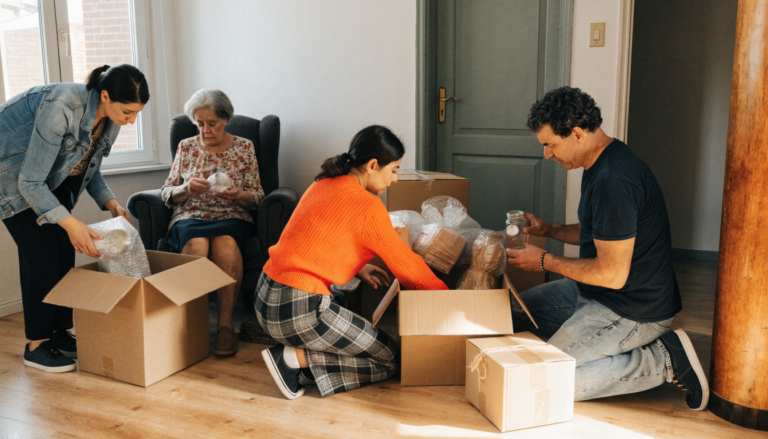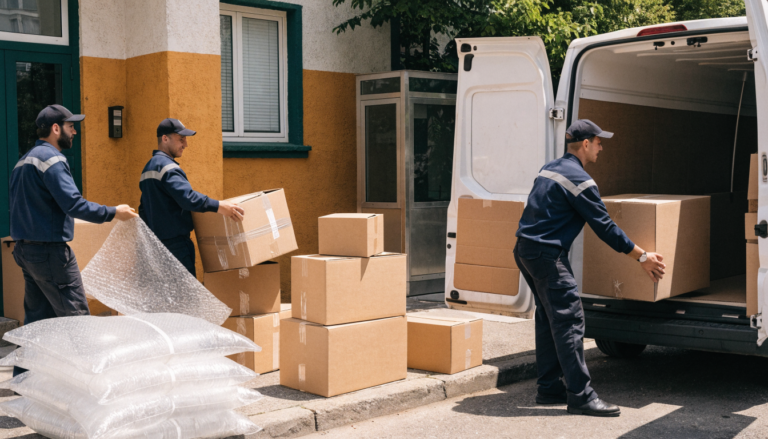
20+ years of experienceOrganization, proper crew and safe handling of the building.






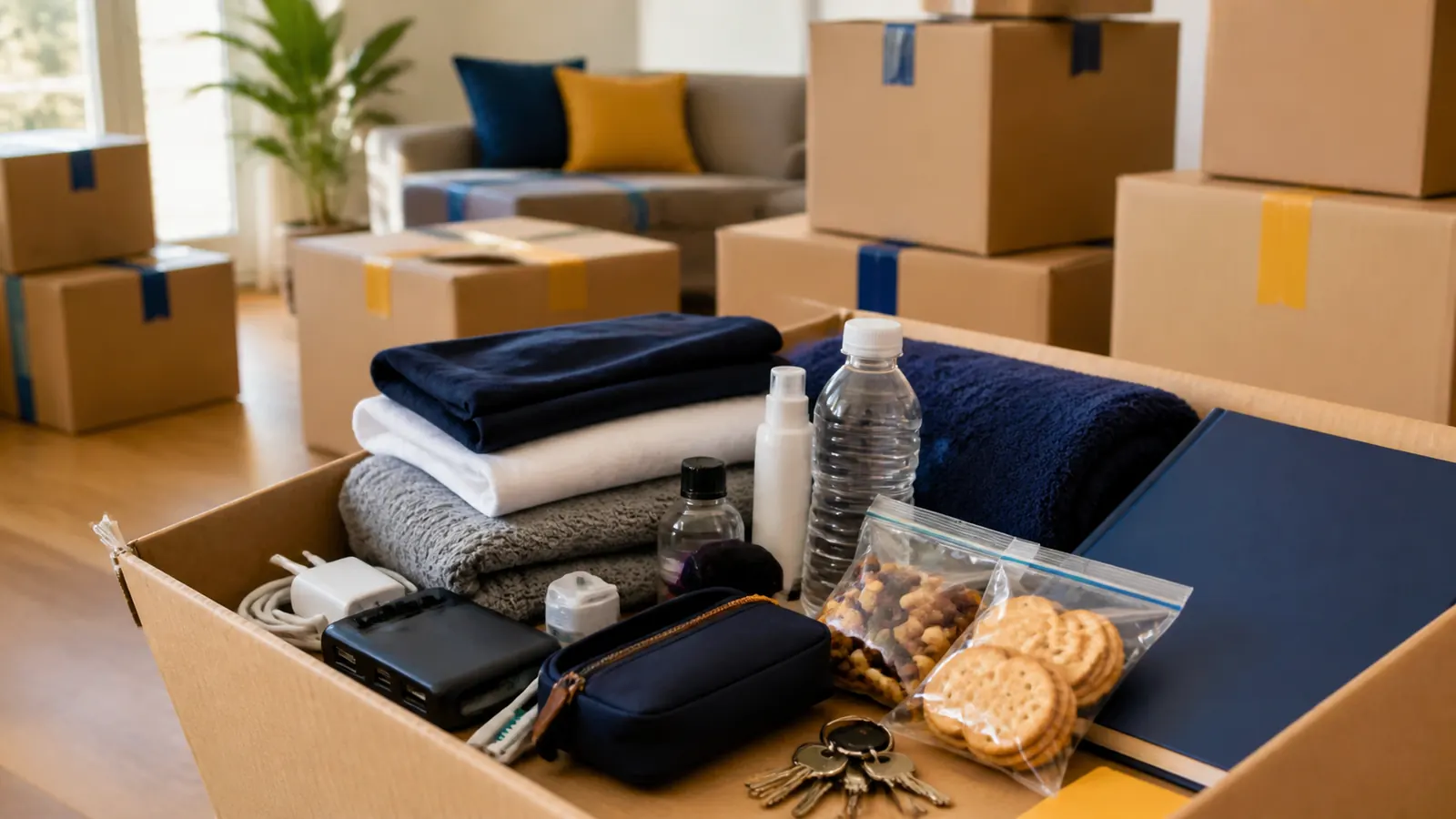
The essentials box for moving (also known as a “first night box”) is the one box you want to have with you when you move into your new home: everything you'll need immediately in the first 24-48 hours, without opening dozens of boxes.
Quick tip: Mark it on the outside as an “Emergency Kit” and have it travel with you (in the car) or stay last in the truck so it comes out first.
What is the moving essentials box and why you need it
This is a special personal box that you prepare before the transfer to the new residence. It contains the essential items you need for the first few hours and the first night, so they don't get lost in the other boxes.
Regardless of whether you are moving yourself or with a moving company, this box significantly reduces stress and helps you to quickly “set up” the essentials.
If you need professional help with transportation, see our services at removals and organise the process safely.
The basics it should contain
Take 15-20 minutes to make a short list and start filling it up gradually. As an example, your moving essentials box might include:
- Clothes for the next day + pyjamas
- Hygiene items: toothbrush/toothpaste, soap, toilet paper, baby wipes
- Small pharmacy (whatever you use frequently) and basic painkillers
- Sheet, pillowcase, blanket or a sleeping bag
- Chargers, Multipurpose chargers and power bank
- Water and snacks (especially if there are children)
- Cleaning essentials + waste bags + kitchen paper
- Important documents in an envelope (lease, contracts, bills, keys)
- Basic cutlery/glasses and a small knife/cutter
- Towel and slippers
- Items for children/pets (food, nappy/sand, favourite toy)
Mini checklist
- Health & medicines
- Sleep (sheets/blanket)
- Current (chargers/polymer)
- Water/snack
- Documents/keys
Tips for stress-free organization
- Choose a strong, distinctive box and write “first aid box” in large letters on the outside.
- If you are working with a freight forwarder, please let them know that this box must come out first.
- Don't overstuff it: you want to find things quickly.
- Put small items in containers/bags by category (hygiene, medicines, cables).
Examples from practice: what they usually forget
In practice, the most commonly “lost” items on the first night are chargers, towel/soap, essential medicines and a clean set of clothes. When all of these are gathered in one place, settling into the new home becomes much smoother.
A small example: A family with children often needs snacks, water, baby wipes and a change of clothes immediately. With the first aid kit ready, you avoid having to “rummage” through kitchen or laundry boxes.
Step-by-step guide: how to make your own
Step 1: Choosing a suitable box
Choose a medium, sturdy box or a large zippered bag. Ideally, choose something that closes well and is easy to carry.
Step 2: Tailoring to your needs
Put only what you will really need in the first 24-48 hours. If you plan to be without internet/current for a few hours, add a flashlight and power bank.
Step 3: Organisation by category
Separate the contents into bags/boxes: hygiene, medicines, cables, documents. It will save you time and nerves.
Step 4: Placement and the “first box rule”
Keep the first aid kit with you or put the last one in the truck. Objective. first that you will open in the new house.
Useful thoughts before you close the boxes
Moving is easier when it is broken down into small, practical steps. The moving essentials box is one of them: it costs next to nothing, but saves a lot of hassle.
And after installation, if you need help with disassembly/installation, see the furniture assembly. In cases of difficult access or floors, it may also help to use the lifting equipment.