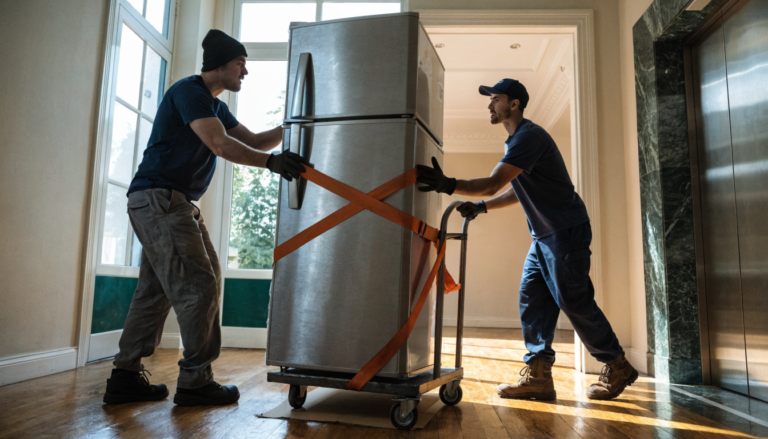
20+ years of experienceOrganization, proper crew and safe handling of the building.








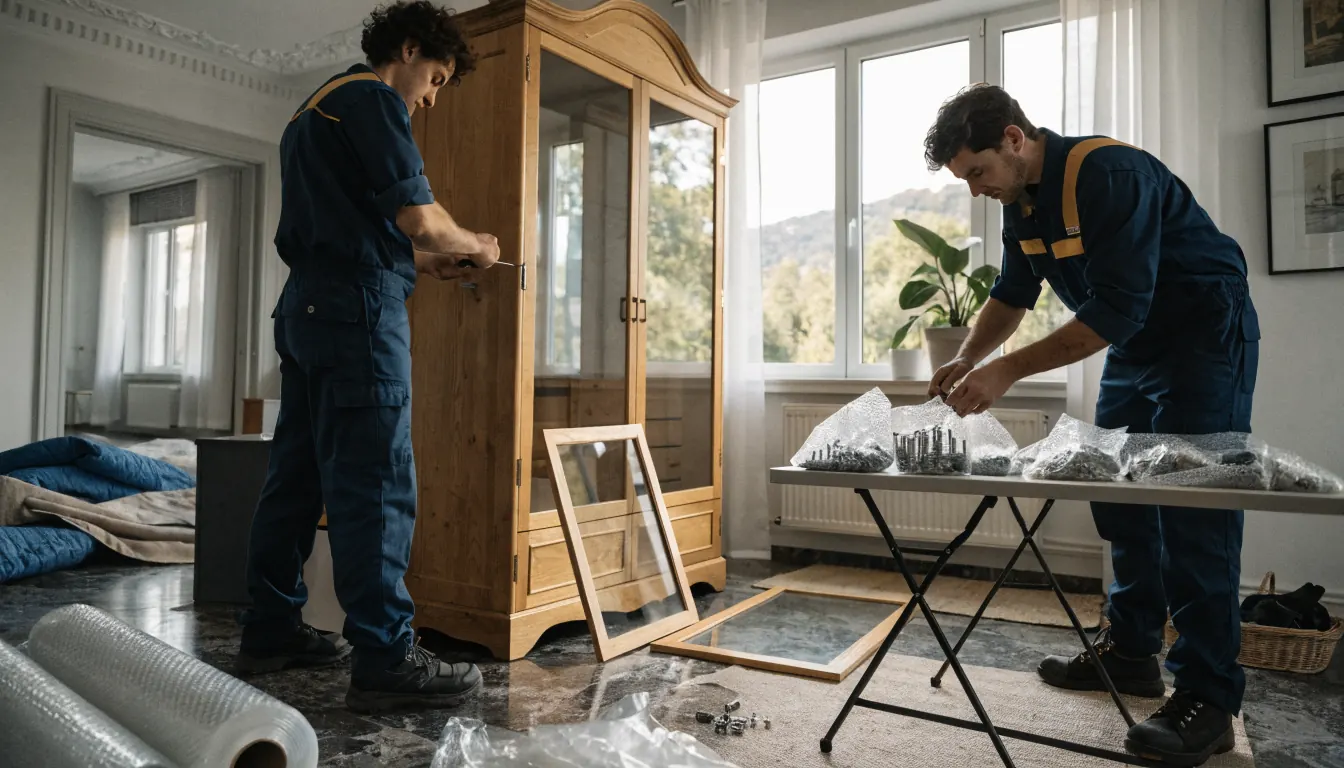
The untying and tying furniture in the move is one of the most critical tasks when you have wardrobes, beds, bookcases or composites that cannot be moved «as is». With the right procedure you reduce volume, protect mechanisms/fittings and avoid damage to stairs, elevators and walls. In this guide, you'll see what the service entails, when it's needed and how to prepare so that the move can be done quickly and safely.
Tip: If the furniture has sliding doors, soft-close mechanisms or screwed to a wall, avoid «DIY» at the last minute. Prefer to have it untied/tied by professionals. See also the service Furniture assembly.
What is meant by «untying and tying furniture»
In practice, the «solving» is the disassembly (removal of doors/drawers, unfastening of the frame, separation into safe parts) and «tying» is the reassembly in the new space (set-up, alignment, adjustment of mechanisms, repositioning of components).
The process is not just screws: it also includes proper marking (e.g. which door belongs where), protection of corners/surfaces and safe transport of components.
When it is necessary to move
- Wardrobes (especially large ones with a loft or sliding doors).
- Beds with storage space or complex mechanisms.
- Libraries/composites that do not pass through doors or stairwells.
- Dining room with large surfaces (foot/joint protection).
- Kitchen furniture or elements that are fixed/bent.
How to prepare for fast and safe untying
- Empty fully drawers/cabinets and take out shelves/glass surfaces.
- Photograph before unlocking (in particular hinges, guides, adjustments) so that there is a reference.
- Gather components (screws, screws, screws, corners) in bags with a label for each piece of furniture.
Common mistakes that lead to damage or delays
- Dissolving without marking: time is lost in the tying process and failures increase.
- Transportation «to about» without proper edge and surface protection.
- Wrong tools that «lick» screws/heads or damage melamine.
- Screws/fittings in bulk in boxes, not separated by furniture.
How the service is priced
The cost of untying and tying furniture in the move depends mainly on:
- Number and type of furniture (wardrobes, beds, composites, etc.).
- Complexity (sliding, mechanisms, built-in/heavy elements).
- Accessed at (floors, elevators, narrow staircases).
- Need for lifting when objects do not pass safely. See: Lifting machinery.
Why it is worth having it done by a professional crew
An experienced removal crew combines assembly technique with experience in the assembly of loading, protection and tying to the vehicle. This reduces the risk of damage and the time the house is left «in boxes». If you are planning to move to Thessaloniki or the rest of Greece, check out our services for Removals and contact for estimate: Contact.
Frequently asked questions
What is involved in untying and tying furniture in moving?;
Includes dismantling (where necessary), organising/marking components, surface protection, safe transportation and reassembly/set-up in the new space.
Does a wardrobe always have to be opened?;
Not always. Depending on size, route (doors/stairs/elevators) and stability, it can be transported as is. Usually, however, large closets are loosened for safety and convenience.
How long does it take to disassemble and assemble?;
It depends on the type and complexity of the furniture. For example, a simple bed is made quickly, while a large sliding wardrobe may require more time.
What to do with the screws and fittings?;
Put them in bags and mark which furniture they belong to (or let the crew organise it). This avoids mistakes and delays in tying.
When is a hoist needed?;
When large pieces cannot safely pass through a stairwell/elevator or when you want to reduce the time and risk of damage. The decision is made after an on-site assessment.
Can I do the solving myself?;
On simple furniture perhaps, but on large furniture or furniture with mechanisms there is an increased risk of damage and assembly errors. If there is a narrow stairwell or heavy objects, it is safer to have a professional crew do it.