
At Prime Conveyance, your new beginning is our priority. With over 20 years of experience, we offer complete moving services in Thessaloniki, combining safety, consistency and the most competitive prices in the market.
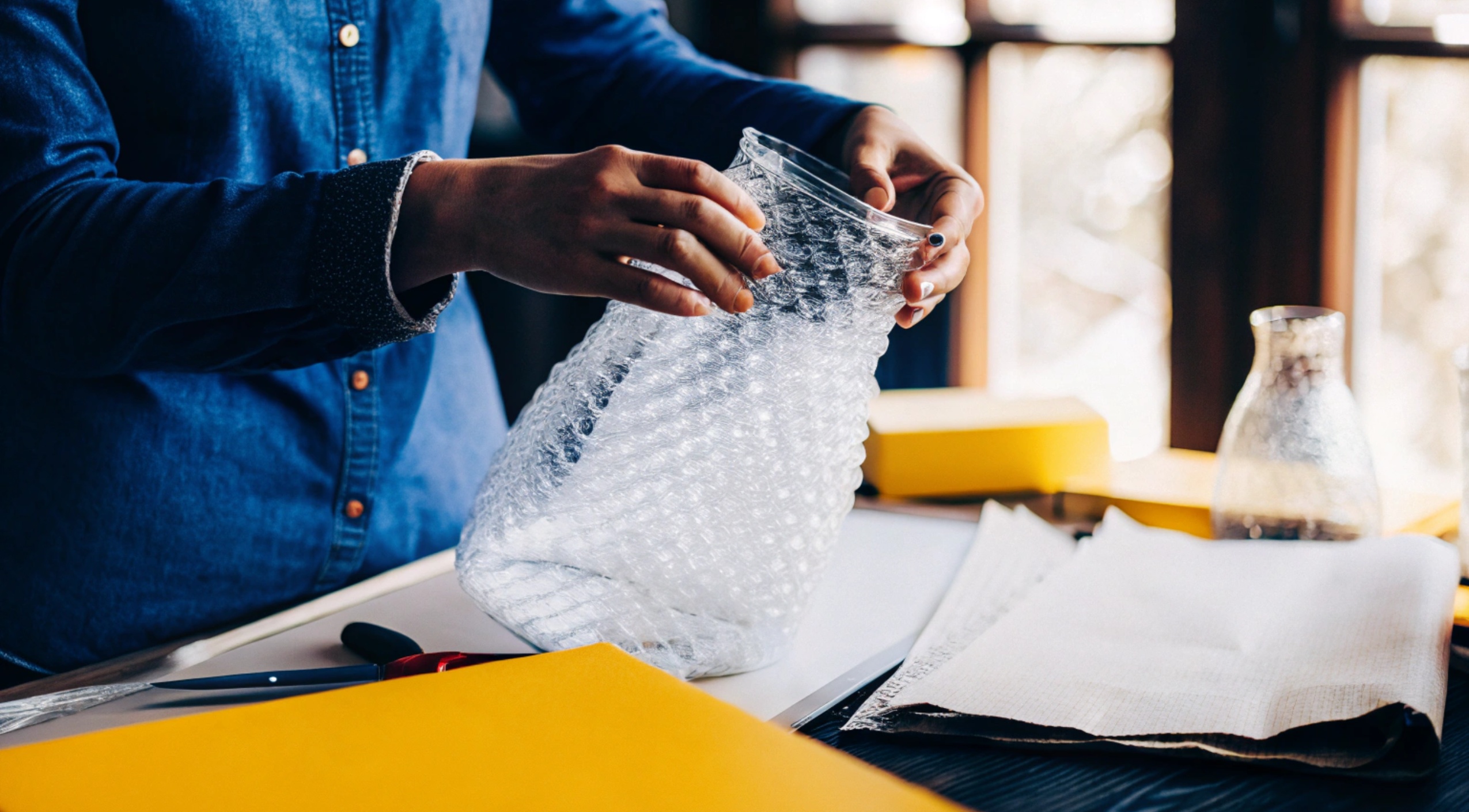
Packing fragile items is one of the most critical steps of any move or shipment, especially if we are talking about glass objects, ceramics or even artwork and decorations. Their safe transport is not only about their value, but also about the emotional attachment the owners may have with them. According to statistics, more than 30% of damages that occur in transportation involve poorly packaged fragile items (source: American Moving & Storage Association). Proper packaging of fragile items ensures that items are protected from shocks, vibrations and stresses that occur during the process of transportation or storage.
Selection of suitable packaging materials for fragile objects
Proper packaging of fragile objects always starts with the selection of the right packaging materials. The basic materials used are bubble wrap, newspaper or special wrapping paper, paper bags or paper bumpers, and cardboard boxes specifically for fragile items. Bubble wrap offers excellent shock absorption and is recommended for glasses, jars or small glass surfaces. Cardboard boxes of various sizes are ideal for packaging glass, ceramics or other fragile objects, especially if separated by special dividers. Choosing materials with the safe packaging and protection of your items in mind is essential to avoid unpleasant surprises when moving or shipping.
Step-by-step guide for packaging fragile objects
1. Object analysis and site preparation
First, sort out all the fragile items you are going to pack. Make a list of all glass, ceramic, decorative and sentimental items. Make sure the work area is clean, spacious and protected from potential accidents.
2. Wrapping each item individually
Each object is first carefully wrapped with paper or bubble wrap. To increase protection, use at least three layers of wrapping material and make sure the material covers every surface.
3. Placement in cardboard boxes with proper layout
Place the items in cardboard boxes, starting with the heaviest at the bottom and the lightest at the top. Use spacers or paper fillers between items. Make sure there is no excess empty space in the box by filling with more paper or bubble wrap. This prevents the items from moving and colliding with each other.
4. Careful closing and marking
Close the box with high strength packaging tape. Do not forget to clearly mark on the carton that it contains fragile objects, with the words “FRAGILE” or “FLEXIBLE”.
Common mistakes in packaging fragile items and how to avoid them
The most common mistakes in packaging fragile items include using inappropriate or worn packaging materials, insufficient reinforcement of box corners, placing heavy items on top of fragile ones, or lack of proper labeling. Another mistake that leads to damage is overloading boxes with many different items. To ensure safe transport of items, always invest in new packing materials, preferring special cases for glasses or bottles, and place valuable items separately. Avoid leaving gaps in the box space to reduce the risk of breakage in shock or sudden movements.
Extra packaging tips for professionals and e-shops
Online store owners or professionals involved in packaging and shipping fragile items know how important the “unboxing experience” is for their customers. Invest in quality materials such as double-sided bubble wrap or foam sheets. You can also add paper fillers for better shock absorption. Don't forget the importance of proper labeling and also providing clear instructions to transport partners. Look for statistics and best practices from logistics companies (such as UPS or FedEx), which often list instructions for packing fragile items as safely as possible.
In cases of luxury items or significant value, it is recommended to insure them during transport. This adds another level of protection and security for both the company and the customer.
The importance of careful packaging of fragile objects
Packing fragile items is not just a duty, but an important part of the experience you provide as a professional or individual. Through proper packing materials, a careful process, a detailed guide and the application of modern practices, you ensure the safe transport and storage of items of value. By applying these packing tips and avoiding common mistakes, you ensure top protection and professional reliability.
Sources:
https://movingaheadservices.com/how-to-pack-fragile-items-without-breaking-them/
https://www.moving.org/
https://www.ups.com/us/en/help-center/packaging-and-supplies/packaging-fragile-items.page
https://www.fedex.com/en-us/shipping/packaging-tips.html
 Greek
Greek  English
  German