
20+ years of experienceOrganization, proper crew and safe handling of the building.



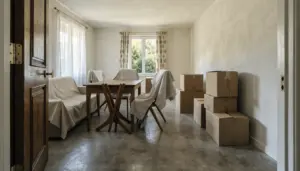





Securing space to park the truck on moving day is one of the «small» steps that make the biggest difference. When there is clear access for unloading, the process is faster, safer and less stressful - especially in densely populated areas of Greece.
At 1 glance: what you will gain
- Reduce delays (and unforeseen costs).
- You reduce the risk of damage (fewer «go-arounds» on the road).
- Avoid problems with neighbours/interference.
- Know in time if you need authorisation to occupy a roadway for moving house.
What «parking space» means for the removal van
In practice, we are not just talking about an empty parking space. We are talking about a spot that allows:
- safe stopping/parking without dangerously blocking the road,
- door/barrier opening (if any),
- easy transportation of objects from/to the entrance,
- space for temporary placement of materials (boxes, moving blankets) without obstructing pedestrians.
When you need permission from the municipality and/or consultation with the Traffic Police
There is no one rule that applies everywhere. What is true in practice is that if you need to tie up/occupy part of a carriageway or pavement in order to properly unload, a permit from the municipality and in some cases the consent of the competent traffic police may be required.
Example (Thessaloniki): The Municipality of Thessaloniki has a procedure «Application for temporary occupation of the roadway (loading and unloading)» and states that a positive opinion of the Thessaloniki Traffic Police Directorate is required to issue a permit.
Example (Athens): The Municipality of Athens provides a service for «Temporary permission to occupy public space». For practical reasons, check exactly which service/documents your municipality requires for occupying a roadway/sidewalk on the day of the move.
Conclusion: if you are on a main road, a one-way street, a narrow street with double parking or need to reserve space, start investigating early for authorisation to occupy a roadway for moving house.
Step-by-step: how to secure a parking space on moving day
- Check access and «barriers». One-way street, bus stops, bins, bollards, ramps for the disabled, garage entrances.
- Coordinate with management/neighborhood. A simple update (time-of-day) reduces the chances of the lot filling up with parked cars.
- Set a realistic «window» for loading and unloading. Usually early morning hours help, but avoid rush hour on busy roads.
- Estimate the required space. For a medium moving truck, aim for several metres along the road to allow easy access to the loading/unloading area.
- If occupancy is needed, start the permit process. Contact the municipality (and where requested, the relevant traffic police) to find out deadlines, supporting documents and any fees.
What information they will usually ask you for
- Address (exact location) and date/time.
- Duration of occupation (e.g. 1-2 hours for unloading).
- Type of work (furniture removal/transfer).
- Space estimate (length/width) and any plan/sketch, if requested.
- Contact details of the person in charge.
Common mistakes that cost time (and nerves)
- You leave it for the last minute. Even if you don't need permission, you need consultation.
- You underestimate the difficulty of access. Narrows, double-parking and corners need a plan.
- You do not provide for a contingency plan. E.g. second stopping point a few metres away.
- You ignore the need for a lift. When the input does not serve, a Lifting machinery may be the solution.
How Prime Transport can help
Prime Movers organises removals and transfers with a focus on practical preparation (access, parking, loading time). Depending on the volume and specifics, we can propose:
- Microtransports when it comes to a few bulky objects or a small load.
- Forward for direct transport within the city, with a flexible approach.
- Furniture assembly to allow large furniture to pass more easily through narrow staircases.
- Emptying of premises when items need to be removed before moving.
Useful advice: When requesting a quote, state from the outset floor, elevator, street width and if there is realistic parking space. This makes the assessment more accurate and reduces surprises.
Sources
- Municipality of Thessaloniki - Application for temporary occupation of the road (loading and unloading)
- Municipality of Athens - Temporary permission to occupy public space
- EUGO.gov.gr - Charge for the use of public spaces (802329)
- Municipality of Veria (eServices) - Request for occupation of a road/sidewalk for moving or work